Define the perimeter geometry
- Route width: Identify the narrowest point where equipment and people must pass.
- Line of travel: Note turns, ramps, and thresholds that can tip bases.
- Entry control: Mark where openings must align with doors, docks, or staging lanes.
Orlando conditions that influence stability
Afternoon storms and gusty outflows can arrive quickly. Outdoors, sandy or recently graded soil reduces lateral resistance for posts and site-stability factors. Wider bases, interlocking panels, or weighted options counter shifting ground. Indoors, panel feet need to sit flush without marring finished floors, and noise considerations may favor rubbered or padded bases during events.
Sites that switch between daytime attendees and nighttime construction need layouts that can be reconfigured without blocking emergency routes. In local distribution buildings, long straight aisles favor continuous barricades with predictable gaps for forklifts.
Panel and barricade options
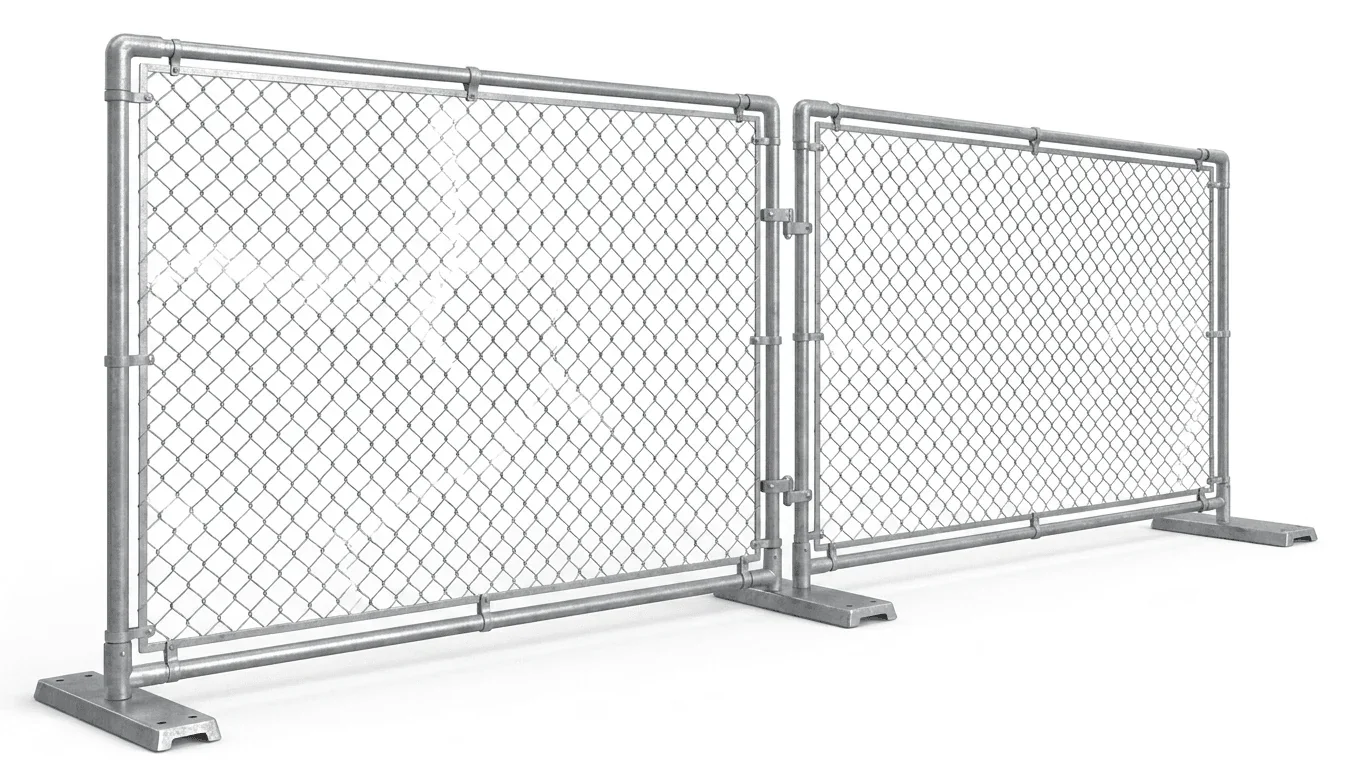
- Standard construction fencing: Good for large footprints and equipment separation; plan for site-stability factors on soft terrain.
- Low-profile barricades: Useful where trip hazards and tight turns are common.
- Privacy or debris screens: Increase wind load; verify site-stability factors and tie points along long runs.
- Gate modules: Reserve space for deliveries and material drops.
Actual conditions, the selected unit’s instructions, and site procedures govern safe installation and use.
Related categories
Perimeter plans often pair with lighting and access: - Night work coverage: /generators-light-towers-rental/ - Indoor slab access: /electric-scissor-lift-rental/ - Uneven outdoor access: /rough-terrain-scissor-lift-rental/ or /articulating-boom-lift-rental/