Define the power and lighting geometry
Start with where the unit can sit relative to the work. For indoor exhibits or maintenance inside large halls, the unit may need to remain outside with cabling routed through controlled entries. For night work on entertainment builds or parking lots, the tower must reach uniform coverage without placing outriggers over soft ground or landscaping.
Key constraints to collect: - Total watts or kVA needed at the furthest device, including start-up surges - Longest cable run and allowable voltage drop - Clearance for mast elevation and swing - Acceptable noise and exhaust profile near occupied areas
Orlando conditions that change the choice
The regional climate brings quick afternoon storms and consistently high humidity. Moisture exposure influences enclosure ratings for distribution panels and connectors. Outdoor staging often sits on sandy or recently graded surfaces; a wider track or off-road tires resist sinking and rutting better than narrow casters. Conversely, indoor convention floors call for clean, drip-free units with tidy cabling and protective crossings.
In local distribution buildings, slab routes are long and straight. Cable management for extended runs can determine whether a larger generator sits farther from doors or whether multiple smaller units stage closer to the load.
Generator planning details
- Fuel: Match runtime windows to refueling access. Consider spill containment on sensitive hardscapes.
- Output: Size for peak plus ambient heat derating. Heat and humidity can influence ventilation needs around enclosures.
- Placement: Confirm setback from doors and air intakes. Check overhead clearances for delivery and removal.
- Cabling: Identify pathway height changes, thresholds, and any water exposure during storms.
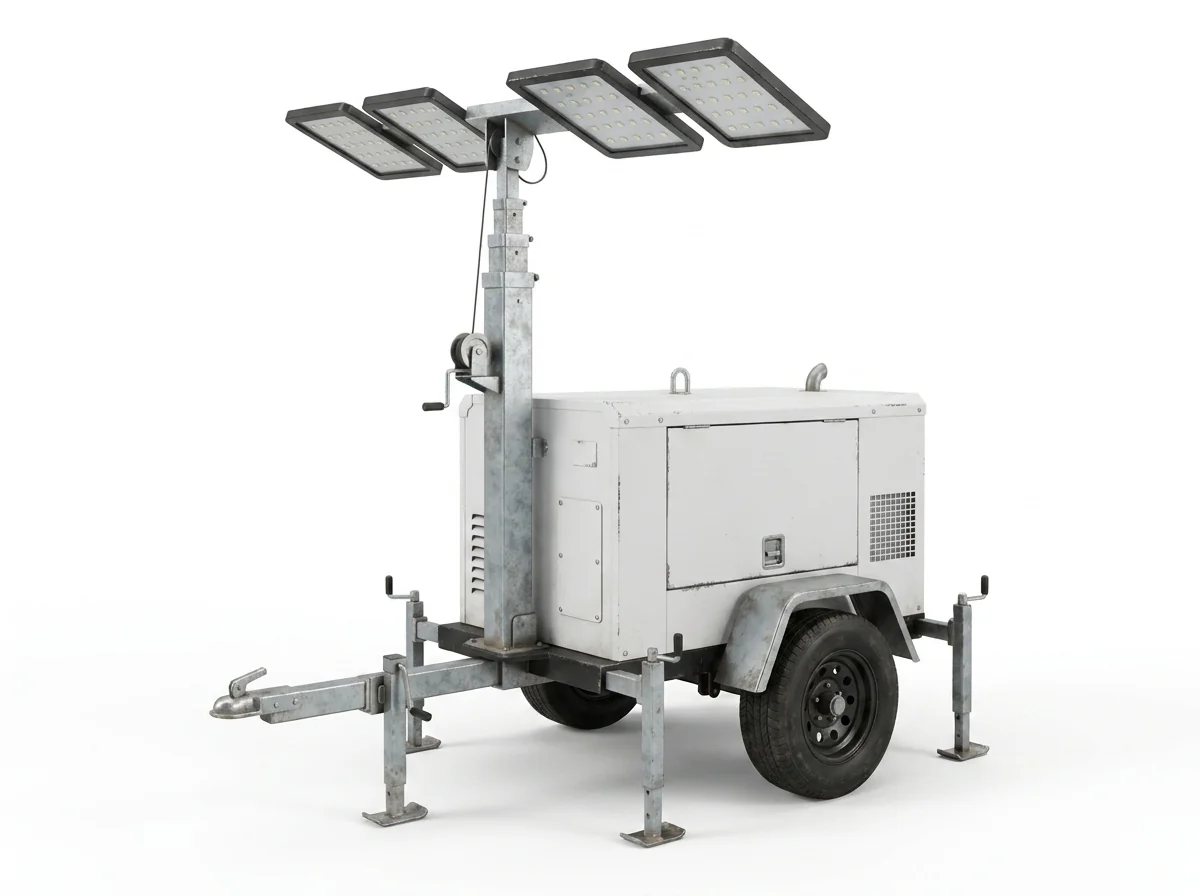
Light tower considerations
- Coverage: Mast height and lamp type determine usable spread without creating glare near guest areas.
- Terrain: On sandy lots, wider stance and appropriate tires help maintain level. Indoors, low-profile, quiet units may be required around events in progress.
- Access route: Measure doorway widths, ramp slopes, and turning radii between staging and the work zone.
Related equipment comparisons
If the lighting task pairs with overhead work, compare access options: - For indoor slab work at fixed heights: /electric-scissor-lift-rental/ - For outdoor setup on uneven ground: /rough-terrain-scissor-lift-rental/ or /boom-lift-rental/